



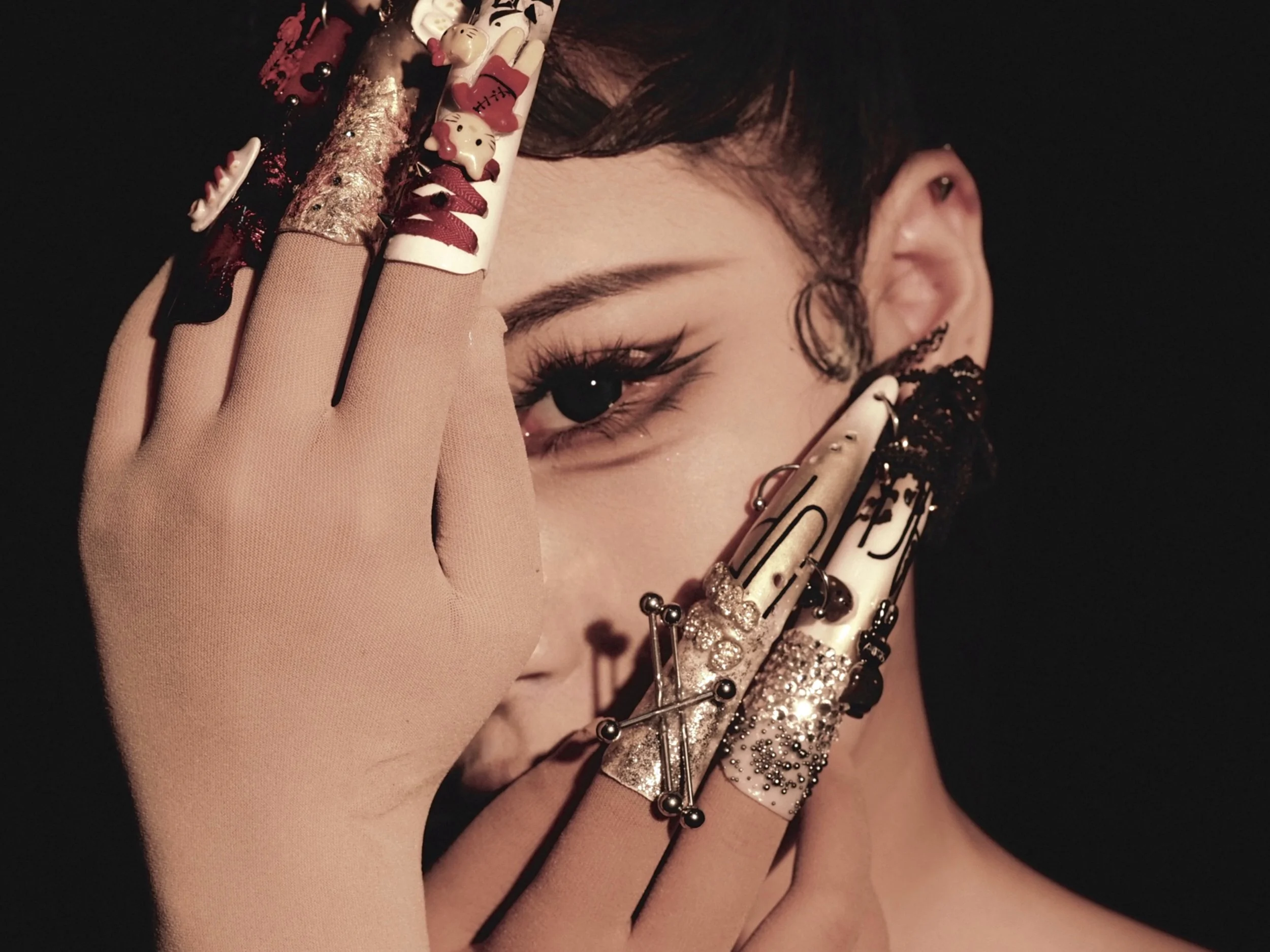



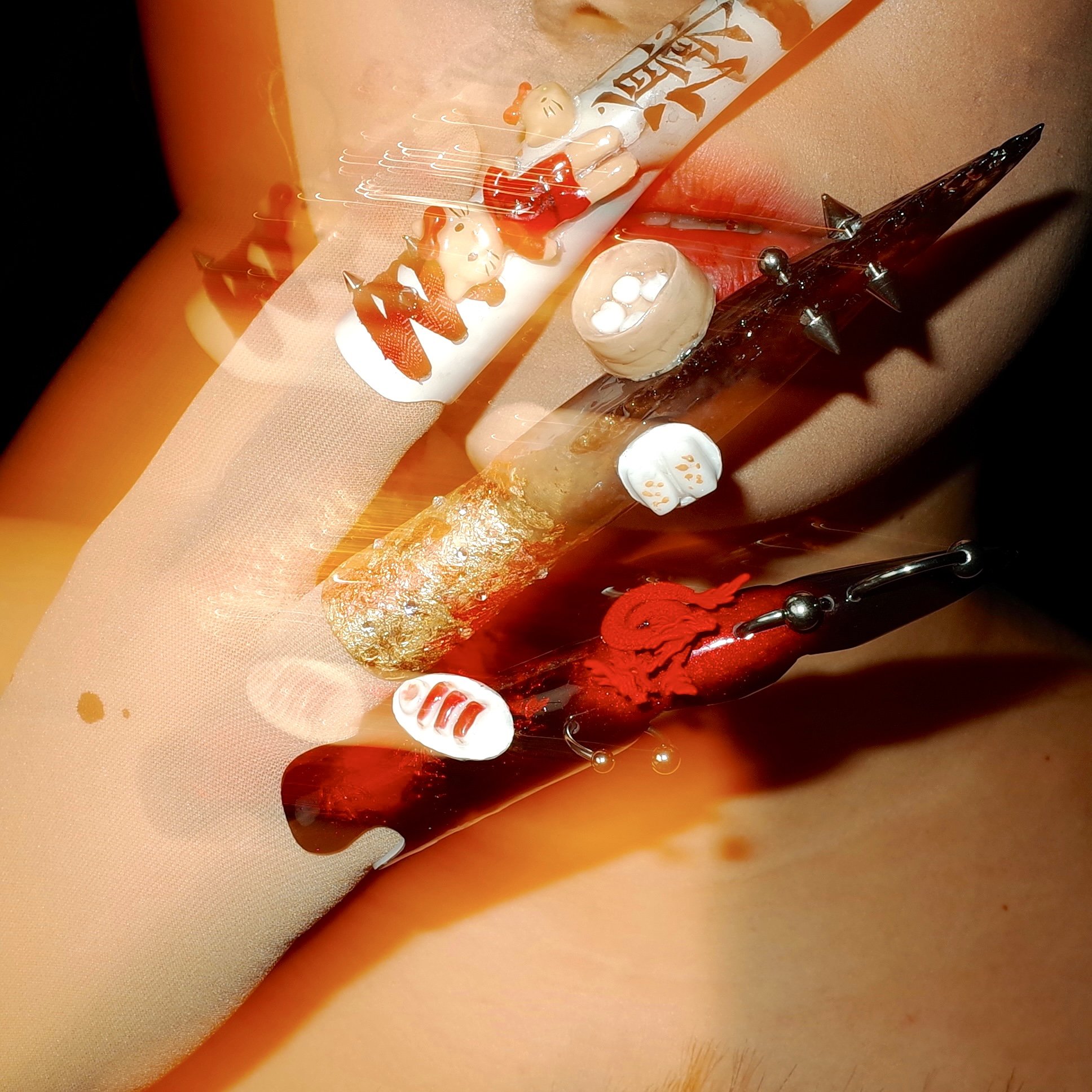



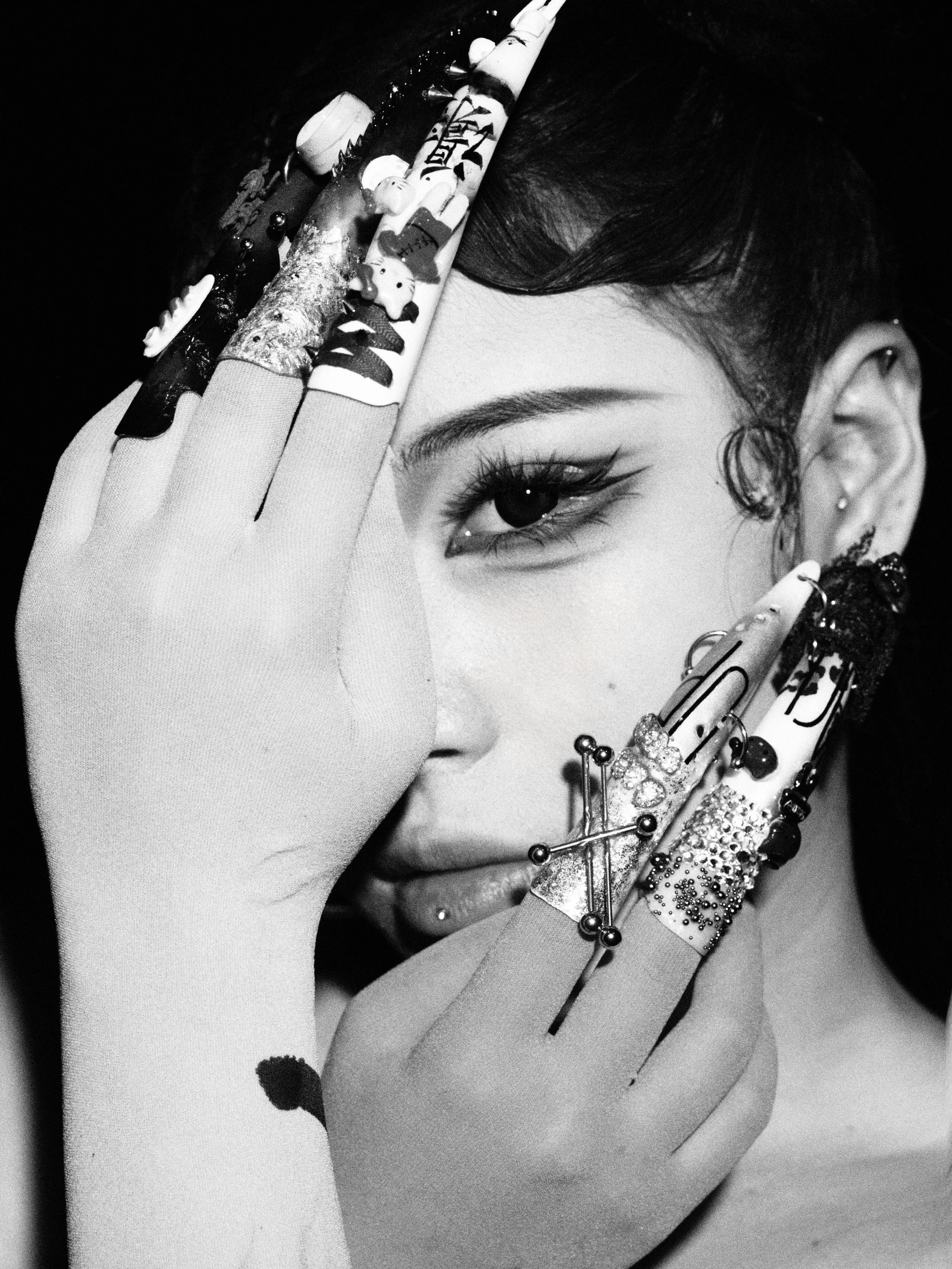
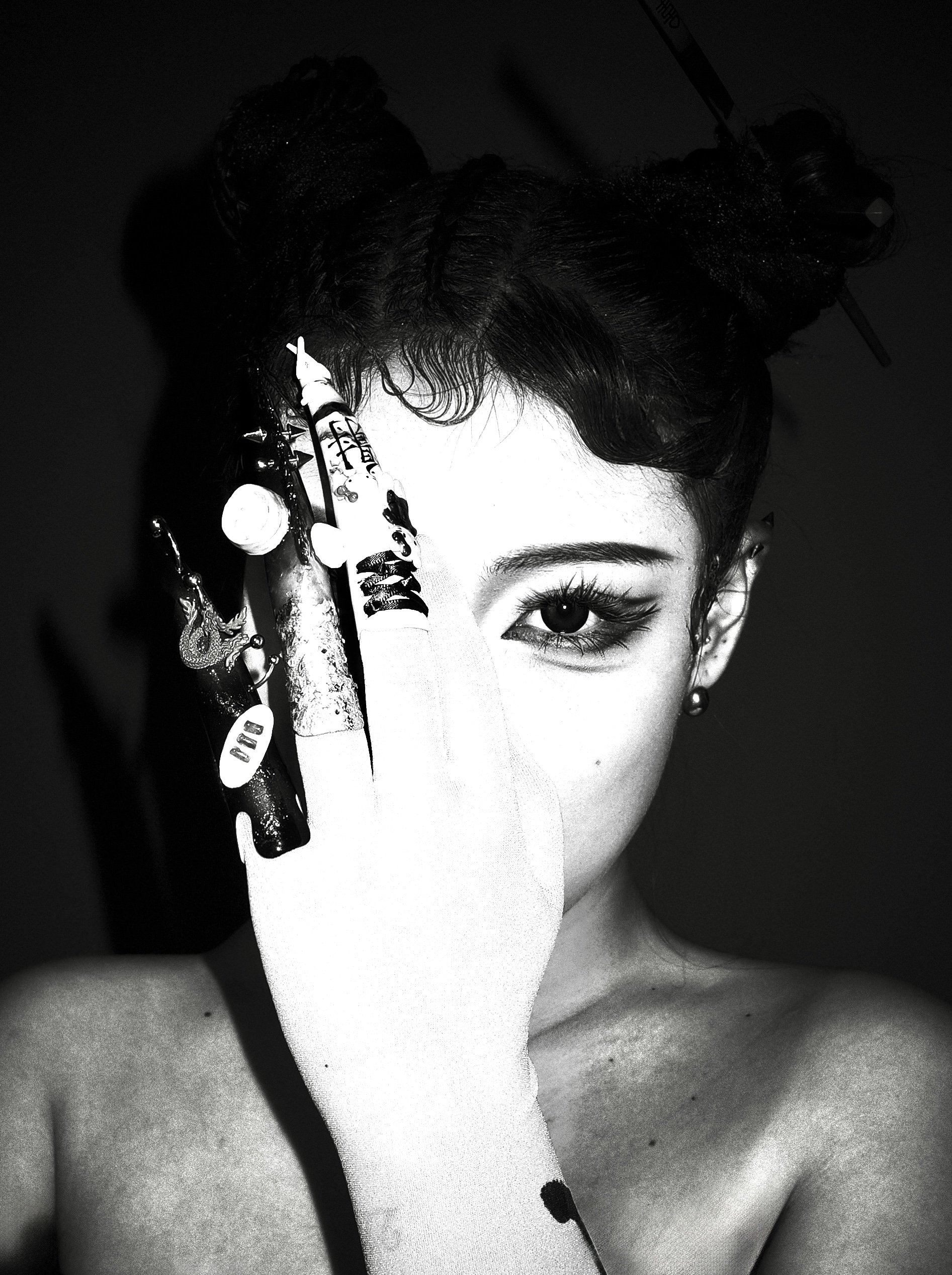

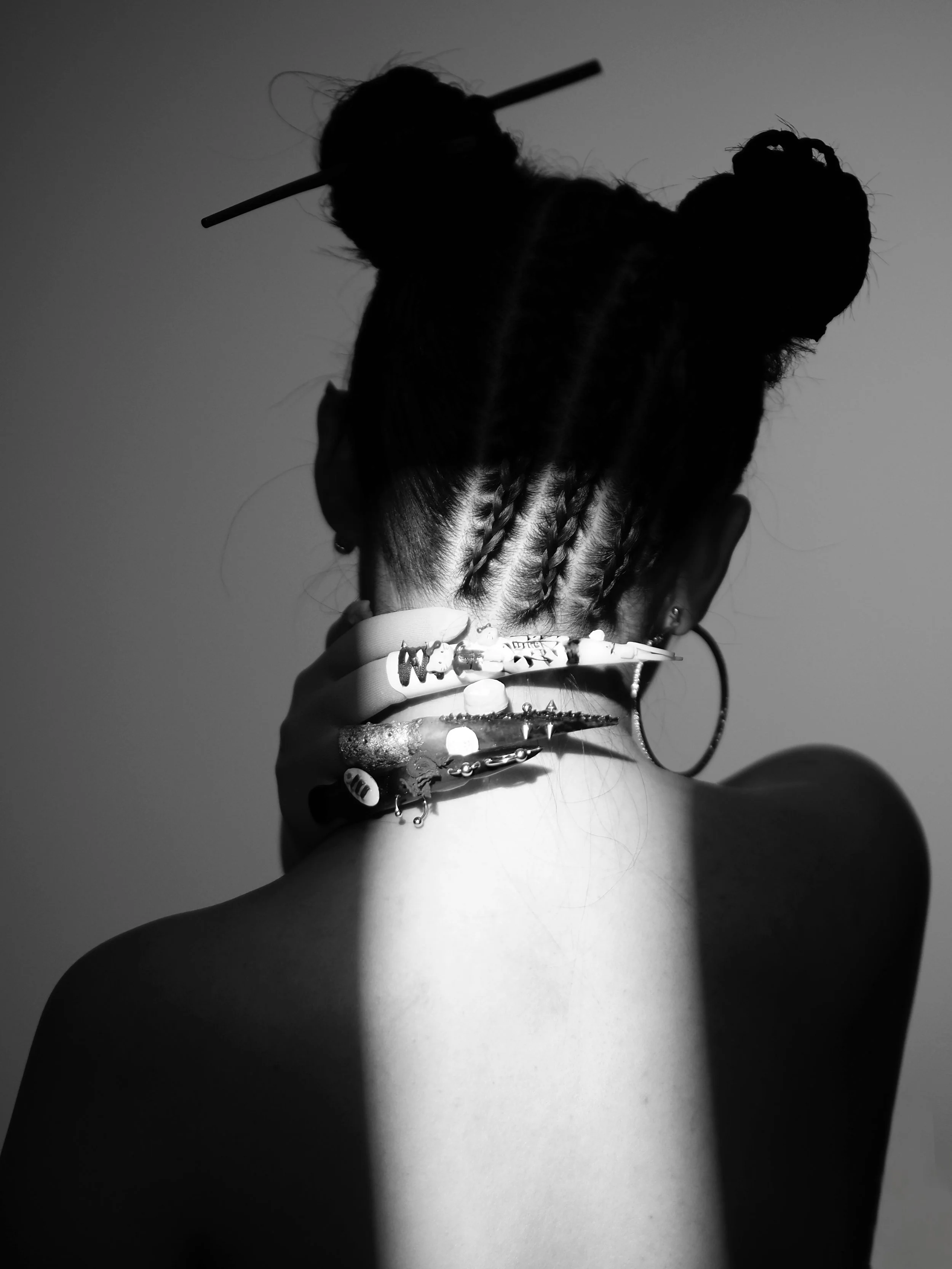
Nail guards, known as 护甲 (hù jiǎ) in Chinese, were ornamental finger coverings historically used in imperial China. They were not merely decorative but held deep cultural and social significance. These accessories first gained prominence during the Ming dynasty (1368–1644) and the Qing dynasty (1644–1912) and were particularly associated with elite women of the imperial court, especially members of the royal family.
A wearable art piece exploring race and class through photography. Featuring Chinese buns with chopsticks and Afro-futurist braids with baby hair, it reclaims "long nails" as symbols of the “non-working class,” challenging stereotypes towards Asian and African women's career identity.